


Table of Contents
ToggleThe easiest way to integrate Planyo with your website is to configure the booking system based on your business needs and connect it using Planyo’s widgets or API. This allows you to automate reservations, synchronize availability, accept online payments, and connect Planyo with your website, CRM, or other business systems.
Planyo Booking System Setup for Businesses That Need Flexible Reservations
Setting up an online booking system is easy. Building a booking workflow that fits your business is much harder. Many companies need more than a simple reservation calendar – they need custom booking forms, payment integration, real-time availability, automated notifications, and synchronization with websites, CRMs, or internal software.
That’s where Planyo stands out. Its flexible booking engine and API allow businesses to automate complex reservation processes while providing customers with a smooth booking experience.
In this guide, we’ll explain how Planyo integration works, when to use widgets or API integration, and how custom development can help automate your booking process.
Need help with Planyo setup or integration?
Whether you need a simple booking calendar or a fully customized reservation platform, our team can help design, implement, and scale your system.
What Is Planyo?
In short, Planyo is the solution for when a “simple calendar” just isn’t enough. While basic tools work for a hair salon or a single consultant, Planyo is built for businesses with moving parts – like hotels, equipment rentals, tour operators, or training centers.
Think of it as the brain behind your reservations. Instead of just picking a time, Planyo handles the complicated stuff that actually runs your business:
- Smart Pricing: It automatically knows when to charge more for holidays, weekends, or long-term stays.
- Resource Management: It keeps track of everything you offer – whether it’s 50 rental bikes, 10 villas, or 5 instructors – so you never double-book.
- Custom Rules: You decide the logic. Need a 2-day minimum stay? Different hours for different seasons? Planyo enforces your rules 24/7.
- All-in-One Flow: Customers can check real-time availability, book their spot, and pay securely in one go.
If your booking process feels like a puzzle, Planyo is the tool that puts the pieces together. It’s a professional, scalable foundation for any business where managing reservations is the heart of the operation.
For a deep dive into the technical details, you can check out the official Planyo documentation.
What Can Be Integrated with Planyo?
Planyo provides multiple integration options depending on the level of customization and technical requirements of the business.
For fast implementation, businesses can use ready-made widgets that can be embedded directly into an existing website without custom development. Available widgets include:
- booking calendars
- reservation forms
- resource lists
- availability search
- maps
- booking buttons
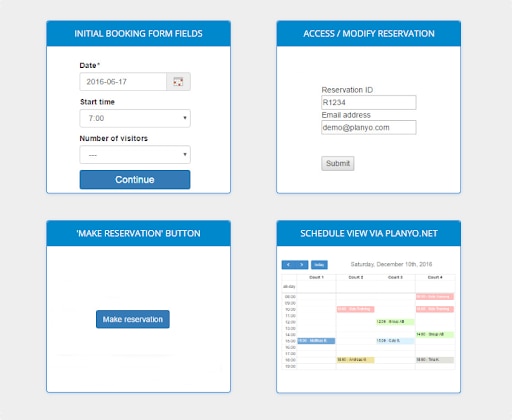
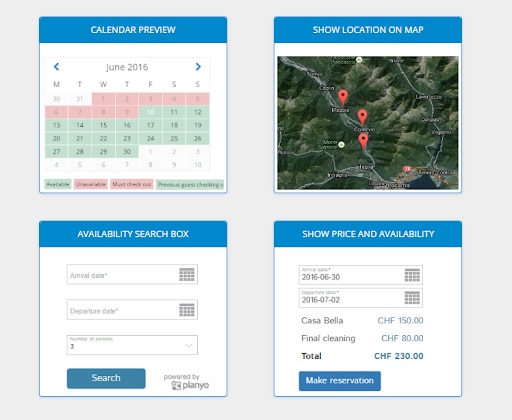
This allows a complete booking flow to be added quickly while keeping implementation simple and cost-efficient.
Planyo also supports integration with major CMS platforms such as WordPress and Joomla, enabling booking functionality to be connected directly to existing websites while maintaining a unified content and reservation system.
For more advanced requirements, Planyo offers plugin-based integration as well as full API access. While plugins and widgets are suitable for standard use cases, API integration provides full flexibility to build custom booking logic, manage availability and pricing dynamically, and implement complex workflows across multiple systems or locations.
As Denis, our Team Lead specializing in booking system integrations, explains:
“The most flexible option is API integration because it allows you to build custom booking logic and connect multiple websites or systems to one booking platform.”
This makes API-based architecture the preferred solution for enterprise-level projects, multi-location businesses, and advanced booking systems.
Planyo WordPress Integration
Integration Options in WordPress (Planyo Ecosystem)
Planyo can be integrated into WordPress in several ways depending on project complexity and required flexibility.
The most common approach is the native WordPress plugin Planyo WordPress Plugin Documentation, which enables quick deployment of booking functionality such as calendars, reservation forms, availability search, and payments. It is typically used for simple or single-site booking systems.
Alternatively, Planyo can be embedded into WordPress using widgets, shortcodes, or scripts Planyo Widgets & Embedding Options, allowing booking elements like calendars, forms, and “book now” buttons to be placed directly into pages with more layout flexibility.
Another option is iFrame-based integration, which allows fast embedding of the booking interface while keeping it separate from the WordPress theme, though with limited customization.
For more advanced requirements, Planyo provides full API access Planyo API Documentation, enabling complete control over booking logic, availability synchronization, custom interfaces, and multi-system or multi-site data exchange. This approach is used for complex or enterprise-level architectures where standard integrations are not sufficient.
Our Implementation Experience (DITS.agency Case)
We worked on a large-scale vacation rental booking platform for a company offering villas, hotels, and apartments for short-term stays. The project included a main booking website combined with a WordPress multisite network used to manage multiple property pages and regional websites under one ecosystem.
The main goal was to enable users to search, check availability, and book accommodations across all properties in real time, while ensuring that data remained fully synchronized across the entire network. A critical requirement was to eliminate any risk of double bookings or inconsistent availability between different sites.
Key implementation highlights included:
- development of a large-scale vacation rental booking platform (villas, hotels, apartments)
- integration with WordPress multisite architecture
- synchronization across 50+ WordPress sites
- centralized reservation management system
- real-time availability updates across all properties
- prevention of double bookings and data conflicts
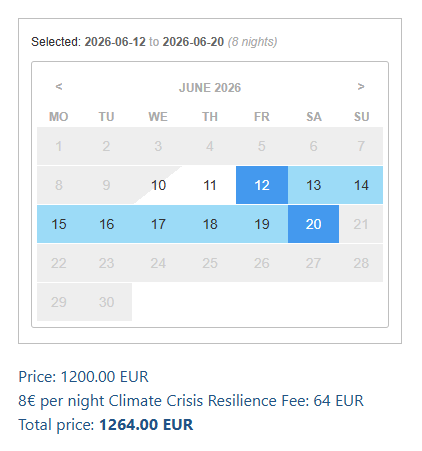
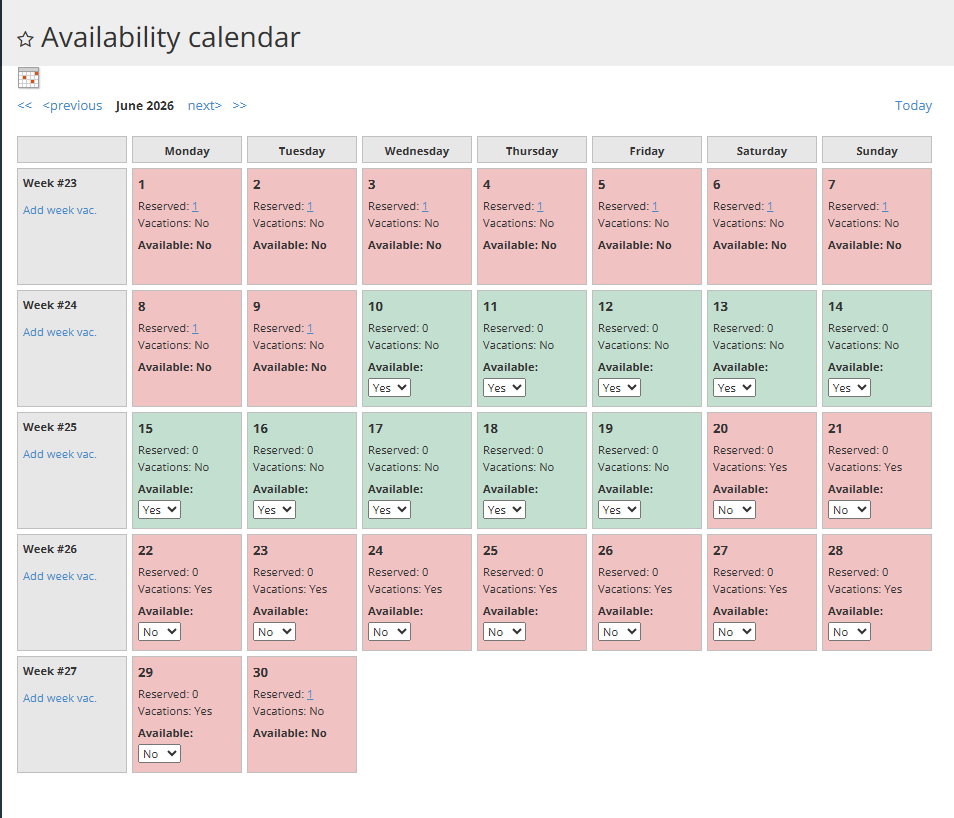
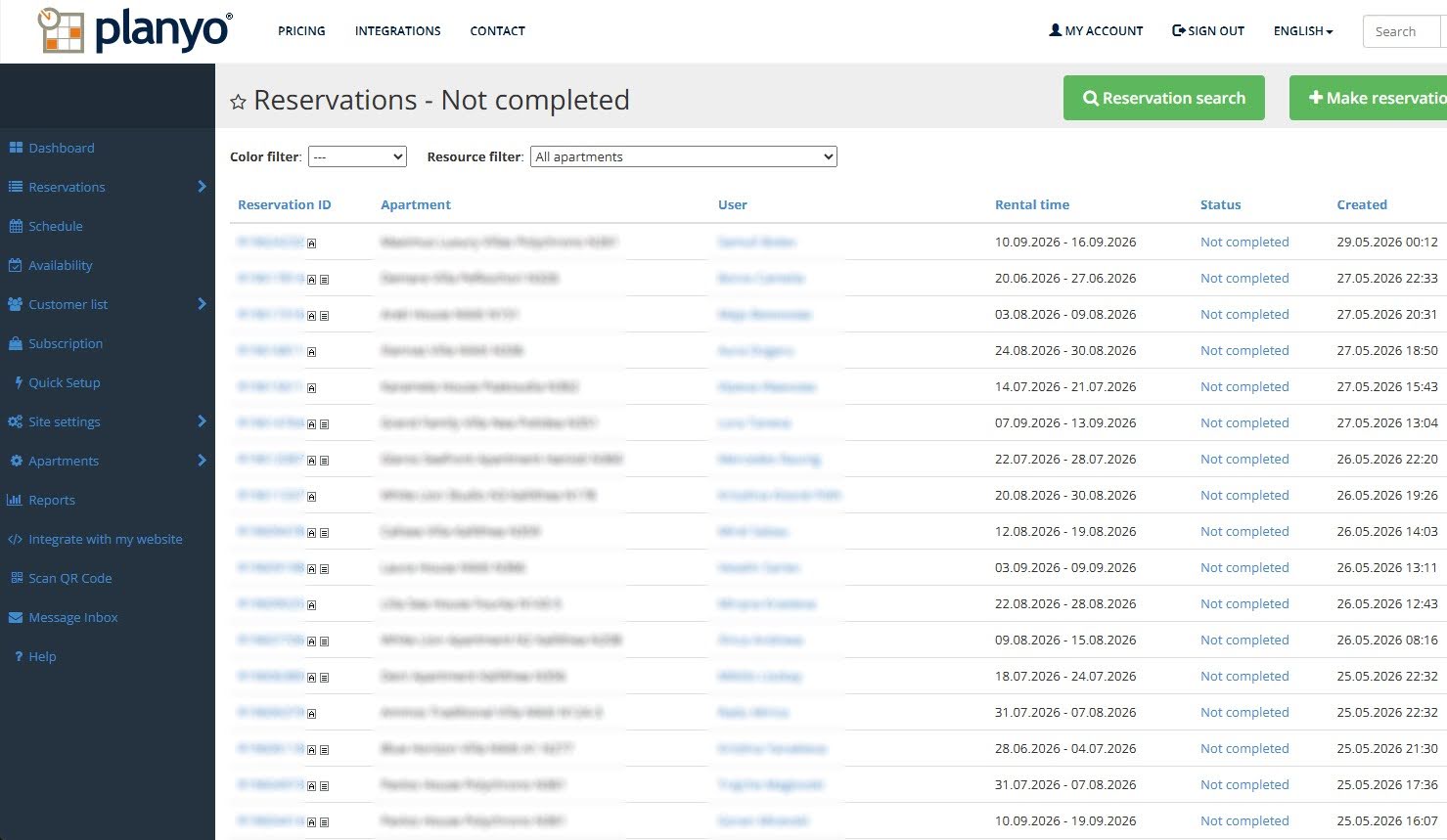
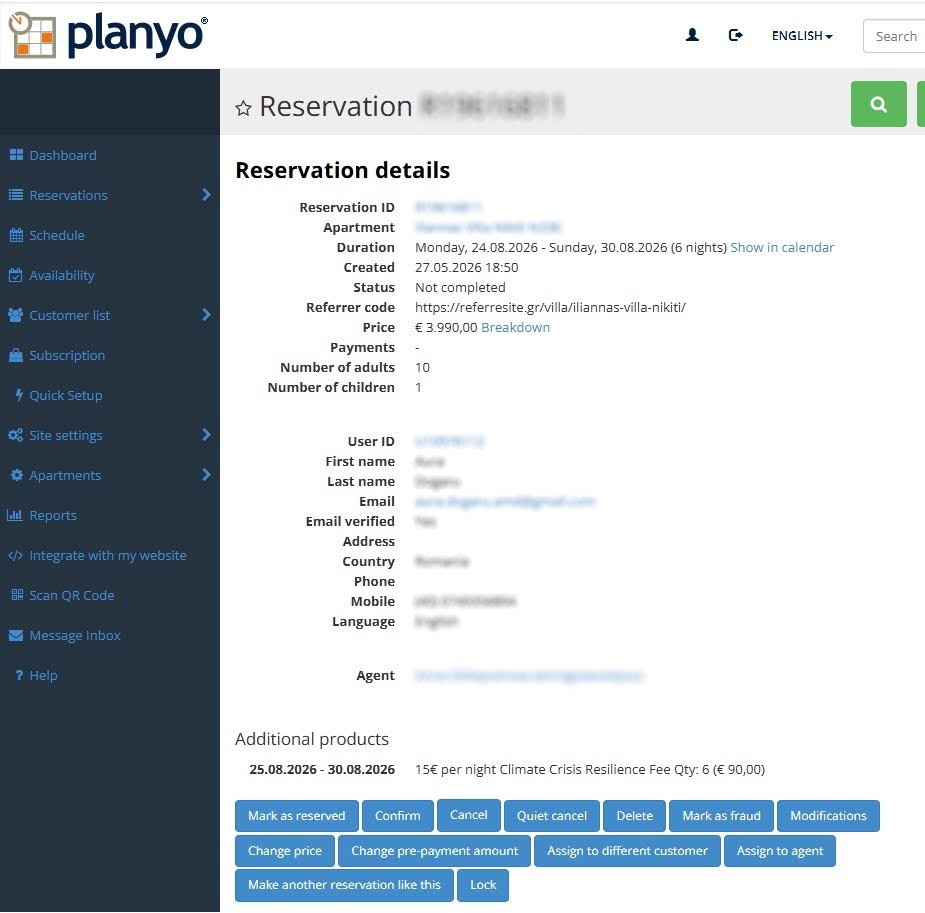
During implementation, the main challenges were related to scaling booking logic across multiple WordPress instances and ensuring real-time consistency of availability data. Standard plugin-based solutions were not sufficient for this level of synchronization and introduced risks of data delays and conflicts.
To solve this, we implemented a custom API-based architecture that connected all sites to a centralized booking system. This provided full control over availability management, booking logic, and cross-site synchronization.
As a result, the client was able to operate a distributed WordPress multisite infrastructure while maintaining a single, unified and fully synchronized booking system across all properties.
Need help with Planyo setup or integration?
Whether you need a simple booking calendar or a fully customized reservation platform, our team can help design, implement, and scale your system.
Payment and Booking Automation
Planyo integrates with payment providers such as Stripe, PayPal, and other supported gateways Planyo Payment Integration Documentation, enabling a fully automated booking workflow from availability check to payment confirmation.
However, when implementing payment automation, it is important to consider several key aspects: synchronization between payment status and booking confirmation, handling failed or delayed payments, and ensuring that reservations are properly locked during the payment process to prevent double bookings.
Once correctly configured, the system allows users to check availability, calculate total booking cost, complete online payment, and automatically confirm reservations. This creates a seamless end-to-end booking funnel from search to final confirmation.
API Limits & Key Implementation Risks
Planyo API has strict rate limits (30 requests per 3 seconds, 300 per minute, 3,600 per hour, 12,000 per day), which can become a critical limitation in high-traffic booking systems.
The main risks to consider are not only hitting these limits, but also delayed availability updates, race conditions, and temporary data inconsistencies, which may lead to outdated availability or booking conflicts during peak load.
To mitigate this, we implemented multi-key failover (automatic switching between API keys when limits are reached) and caching of availability/search requests to reduce unnecessary API calls and improve performance.
We also optimized synchronization logic to prevent simultaneous write operations, ensuring stable and consistent booking data across the system even under heavy traffic.
Why Businesses Choose Planyo
Businesses choose Planyo because it combines flexible booking logic, resource-based reservations, customizable booking slots, seasonal pricing, online payments, API access, embeddable widgets, and multi-language support.
It is particularly well suited for companies that outgrow simple scheduling tools like Calendly or basic WordPress booking plugins and require more advanced, scalable reservation logic.
From our experience, the support service is also a strong advantage of the platform. When we reached out with technical questions during implementation, all issues were consistently resolved within 24 hours, which significantly helped streamline development and integration processes.
Why Work With DITS.agency for Planyo Integration
We provide end-to-end Planyo implementation, covering full setup and technical integration for booking systems of any complexity.
Our services include booking system configuration (resources, pricing, rules), website integration (widgets, shortcodes, custom frontend), WordPress integration (plugin setup and customization), API development for advanced logic, booking automation, multi-site architecture, and performance optimization.
We also support technical consulting, including booking flow design, scaling strategies, and system optimization.
Need help with Planyo setup or integration?
Whether you need a simple booking calendar or a fully customized reservation platform, our team can help design, implement, and scale your system.